Congress High Command, INDIA Bloc Rift and the CJP Protest: What Is Brewing?
By: Javid Amin | Delhi / Srinagar| 10 October 2026
The Delhi confrontation over the Cockroach Janta Party’s (CJP) protest against Chief Election Commissioner Gyanesh Kumar has exposed a question that could prove more consequential for the opposition than the demonstration itself: how united is the INDIA bloc when it comes to translating shared political concerns into coordinated action?
As police restrictions and mass detentions turned the October 10 mobilisation into a national controversy, opposition parties responded with criticism, statements of support and varying degrees of participation. The Congress, the principal national opposition party, kept its distance from the CJP-led demonstration even as its senior leaders condemned the police action. Left parties and the Aam Aadmi Party backed the mobilisation, while the Trinamool Congress also expressed support for the agitation.
In Jammu and Kashmir, the political response presented another layer of complexity. Chief Minister Omar Abdullah criticised the restrictions in Delhi and drew parallels with the experience of Kashmir. Peoples Democratic Party president Mehbooba Mufti also condemned the crackdown. Yet, according to the political picture outlined around the mobilisation, the National Conference did not have a prominent frontline presence at Jantar Mantar, while the PDP was not visibly represented in the street protest.
The differences raise a larger question for Congress president Mallikarjun Kharge, Rahul Gandhi and the party’s national leadership: can the opposition build a credible collective campaign around electoral transparency and democratic rights when its constituent parties continue to make independent decisions about where, when and how to protest?
The immediate dispute concerns the Special Intensive Revision (SIR) of electoral rolls and allegations of wrongful voter deletions. But the political story extends beyond the Election Commission. It concerns leadership, coordination, competing party interests and the difficulty of sustaining an opposition alliance in which unity is often easier to announce than to demonstrate.
Congress condemns the crackdown but chooses its own political route
The Congress’s decision not to join the CJP-led demonstration was among the most significant political developments surrounding the October 10 protest.
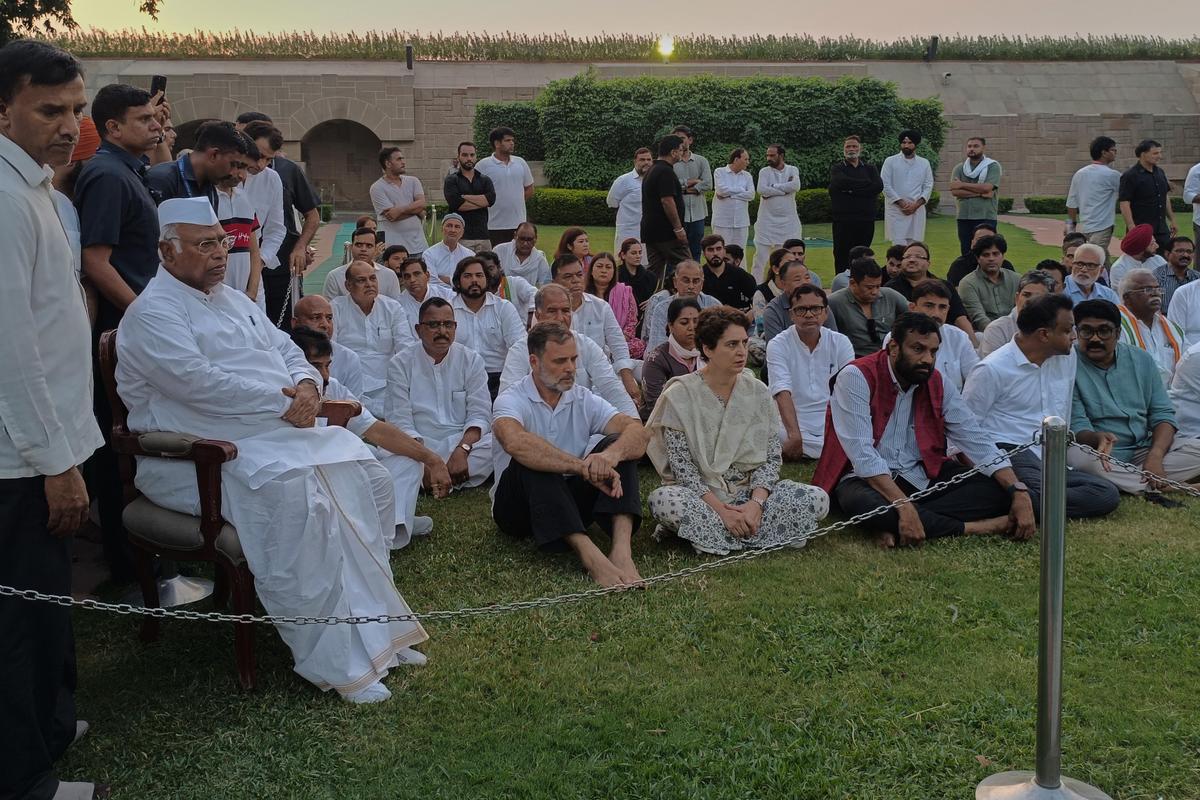
Senior Congress leaders criticised the police action and questioned the restrictions imposed on protesters. Kharge accused the government of suppressing dissent, while the party’s wider messaging continued to focus on electoral accountability and the treatment of citizens challenging the authorities.
But criticism from outside the protest venue was not the same as participation in the mobilisation itself.
The Congress chose to pursue its own political programme rather than appear as a participant in a demonstration organised by CJP. Reports indicated that the party was preparing a separate jan andolan in Delhi for October 12 and had sought participation from opposition allies.
That decision offers an important clue to the strategy behind the apparent distance.
Congress may have calculated that joining a mobilisation led by a relatively new political formation would risk allowing another organisation to define the national opposition’s message. By organising its own campaign, the party could retain control over its political language, leadership visibility and next steps.
There is also a question of scale and political ownership. Congress has historically presented itself as the principal national challenger to the BJP. Its leadership may be reluctant to place the party in a supporting role at a demonstration where another organisation sets the agenda, selects the demands and directs the mobilisation.
These are plausible strategic explanations, not confirmed accounts of private deliberations within the party. The decision may also have reflected practical considerations, differences over protest planning or a preference for a separate programme.
Whatever the internal reasoning, the public effect is clear: the Congress condemned the government’s response but did not participate in the CJP-led street action in the same way as some opposition allies.
That distinction creates a political dilemma. Congress can argue that it is pursuing a more organised, independent campaign. Critics can counter that the opposition missed an opportunity to demonstrate unity at a moment when electoral credibility and freedom of protest were being challenged.
The party’s October 12 mobilisation may therefore become an important test. If it attracts a broad range of opposition parties and sustains attention on electoral transparency, Congress could demonstrate that its separate approach was part of a larger strategy. If participation remains limited, the decision to stay away from the earlier mobilisation may be interpreted as another sign of fragmentation.
Is Congress protecting its leadership space—or weakening the opposition?
The Congress decision highlights a tension that has repeatedly confronted the INDIA bloc: the difference between being united against a common opponent and agreeing on the leadership of a common campaign.
The alliance brings together parties with different regional bases, political traditions and electoral calculations. Their opposition to the BJP-led government does not automatically mean they will agree on every protest, campaign slogan or organisational decision.
For Congress, the challenge is particularly sensitive. It seeks to lead a national opposition campaign while working with regional parties that have their own voter bases and political ambitions. These parties may cooperate with Congress in Parliament or on specific issues but resist arrangements that appear to subordinate their identity to the national party.
The emergence of a CJP-led campaign introduces another variable. If a new organisation can attract students, activists and opposition supporters around a national issue, established parties must decide whether to join it, support it from the sidelines or build a competing platform.
Each option carries risks.
Joining the mobilisation can help amplify a common demand, but it may give the organisers greater visibility and influence. Staying away can preserve a party’s independent identity, but it may make the opposition look divided. Organising a separate demonstration can establish leadership, but it risks splitting participation and diluting the collective impact.
For Congress, the real strategic question is not whether it should join every protest organised by another group. No political party can be expected to participate in every mobilisation. The question is whether the party has a coherent framework for deciding when a common cause requires a common platform.
If the answer depends mainly on who organises an event, the opposition risks turning every campaign into a contest for visibility. If the answer is based on agreed political objectives, the alliance can preserve differences while still coordinating action where it matters.
The Delhi protest has made that choice more visible.
The INDIA bloc’s problem: common grievances, different methods
The CJP mobilisation exposed a familiar weakness in opposition politics. Parties can agree that an issue deserves scrutiny while disagreeing over the best way to pursue it.
The protest centred on alleged irregularities in the Special Intensive Revision of electoral rolls and demanded Gyanesh Kumar’s resignation. The issue has wider implications because electoral-roll accuracy affects the ability of eligible citizens to vote and public confidence in elections.
Congress and several opposition parties have raised concerns about electoral transparency. But their approaches to the CJP demonstration differed.
The Left parties and AAP supported the mobilisation. The Trinamool Congress also indicated support, although the precise extent of its participation was not uniform across reports. Congress chose its own political route.
This divergence does not automatically mean that the INDIA bloc is collapsing. Political alliances routinely allow members to campaign independently, and a party’s absence from one event does not necessarily amount to a rejection of the underlying issue.
However, repeated differences over high-profile campaigns can weaken the alliance’s ability to create a clear national narrative.
A political coalition needs more than a common opponent. It needs a minimum level of agreement on priorities, messaging and the circumstances in which members will act collectively.
Without that coordination, the public may see several opposition parties making similar statements but failing to combine their political influence. The result can be a fragmented campaign in which each party receives attention for its own position but the broader issue loses momentum.
The CJP episode therefore raises a practical question for the alliance: should it establish a common mechanism for responding to major national controversies, including electoral disputes and restrictions on peaceful assembly?
Such a mechanism would not require every party to attend every protest. It could instead establish agreed principles, shared demands and a process for deciding when joint mobilisation is necessary.
For a coalition as diverse as INDIA, that may be more realistic than expecting complete uniformity.
National Conference: public criticism, but limited frontline visibility
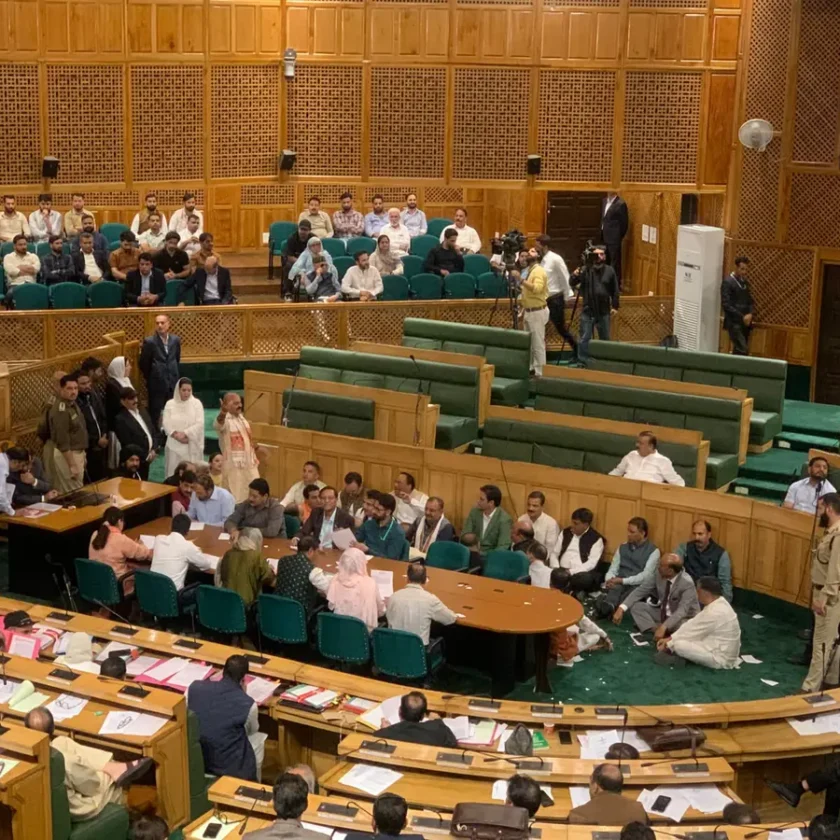
The National Conference’s position is particularly important because it governs Jammu and Kashmir and is a constituent of the INDIA bloc.
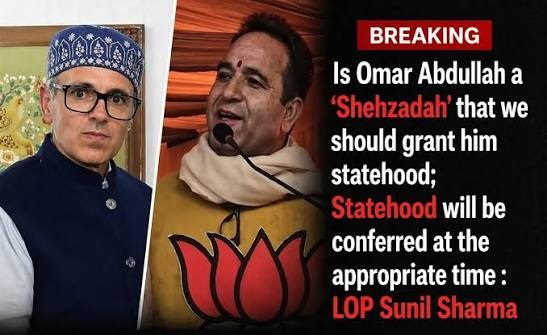
Omar Abdullah criticised the restrictions in Delhi and compared the situation with the restrictions experienced in Kashmir after the abrogation of Article 370 in August 2019. His comments placed the Delhi operation within a broader debate over security measures, political expression and the treatment of dissent.
That public intervention meant the NC was not entirely silent on the issue. But its political messaging did not translate into a prominent frontline role at the CJP demonstration, according to the participation picture described around the event.
The distinction between public support and organisational participation matters.
A chief minister’s statement can give an issue national visibility, particularly when it comes from a region with direct experience of prolonged restrictions on communications and movement. Yet a statement does not carry the same organisational meaning as deploying party workers, sending senior representatives or joining a coordinated protest.
Why might the NC have adopted a more measured approach?
One possibility is that the party sought to express solidarity without making itself a central participant in a campaign organised by another political formation. Another is that it preferred to focus on its own political responsibilities and the specific demands it has prioritised in Jammu and Kashmir.
The party also operates within a distinctive political environment. As the governing party in the Union Territory, it must balance criticism of the Centre with the practical demands of administration and its own relationship with national opposition parties.
These considerations could help explain a cautious approach, but they do not establish the NC leadership’s actual private motives.
The political consequence, however, is open to scrutiny. If the NC supports the principle of electoral transparency and criticises restrictions on dissent, observers may reasonably ask what form of collective action it considers appropriate.
The party can answer that question through its own political decisions. What matters is whether its public position is accompanied by a consistent strategy, rather than whether it attends one particular demonstration.
For Congress, the NC’s approach also illustrates the limits of assuming that formal alliance membership will automatically produce coordinated street mobilisation.
Mehbooba Mufti’s condemnation raises a separate question for the PDP
The Peoples Democratic Party presents a different political picture.
Mehbooba Mufti condemned the detention of opposition leaders and activists and drew attention to the restrictions imposed in Delhi. Her criticism aligned the PDP with the wider concerns being expressed about democratic dissent and the use of police powers.
Yet the PDP was not visibly represented in the Delhi street mobilisation described around the protest.
That gap between rhetoric and physical participation has invited questions about the party’s position. Is the PDP comfortable supporting the principle of peaceful protest without joining a campaign organised by another political group? Does it prefer to preserve its political independence? Or did the party simply decide that the particular mobilisation was not the right vehicle for its concerns?
Without direct confirmation from the party, it would be premature to assign a definite motive.
The broader political context nevertheless matters. The PDP has historically sought to distinguish its position from that of the National Conference, including over the handling of Article 370, statehood and engagement with the Centre. Its political identity is tied closely to its claim that it offers a distinct voice on Kashmir’s political rights and constitutional status.
Joining a national opposition mobilisation can strengthen solidarity on a common issue, but it can also blur the distinctions a regional party wants to maintain. Conversely, remaining outside a protest while condemning the state’s response may expose the party to criticism that its solidarity stops short of practical participation.
For the PDP, the decision involves a familiar balancing act: retain an independent political identity while demonstrating that its criticism of government action is backed by a clear and consistent approach.
Mehbooba’s statement ensures that the party has entered the public debate. Its absence from the demonstration, however, leaves room for questions about how the PDP intends to translate its position into action.
The party could clarify its stance by explaining whether it supports future coordinated protests, intends to pursue the issue through legal or political channels, or believes that separate mobilisation would be more effective.
Until then, the gap between condemnation and participation will remain a subject of political debate rather than proof of any undisclosed arrangement.
Kashmir’s political divide complicates the national opposition story
The differing responses of the NC and PDP are significant because the two parties have overlapping constituencies but distinct political identities.
Both have criticised aspects of the restrictions in Delhi. Yet their relationship with each other, their views on political strategy and their competing claims to represent Kashmir’s interests make a fully coordinated response difficult.
This is not new. In Jammu and Kashmir, cooperation among regional parties has often been shaped by the immediate issue at stake. Parties may support the same demand while disagreeing over its sequencing, leadership or political implications.
The restoration of statehood, Article 370, relations with the Centre and the balance of authority between elected representatives and appointed officials have all generated different responses from regional parties.
The CJP protest introduces a national electoral issue into that landscape. The NC and PDP can both criticise the treatment of protesters without necessarily agreeing on how to organise a campaign or how closely to align themselves with the wider INDIA bloc.
For Congress, this presents a challenge within a challenge. The party must manage differences among its national allies while recognising that regional parties have political priorities that cannot always be subordinated to a national strategy.
The lesson is not that regional parties should abandon their independence. Rather, national coordination requires a clearer understanding of where interests overlap and what each party is prepared to do when common concerns arise.
If the opposition wants to build a sustained campaign on electoral integrity and civil liberties, it will need to bridge the gap between shared statements and coordinated decisions.
What could be brewing behind the scenes?
The divergent responses have naturally prompted speculation about private conversations, political calculations and possible disagreements among opposition leaders. But there is a difference between identifying strategic possibilities and claiming knowledge of confidential discussions.
There is no basis, from the public participation pattern alone, to conclude that Congress and its allies have reached a secret arrangement, that the NC or PDP has struck a deal with the BJP, or that a specific internal confrontation has taken place.
What can be assessed is the political logic suggested by their public choices.
First, Congress appears intent on retaining control of its national campaign. Its decision to stay away from the CJP demonstration while preparing its own mobilisation suggests a preference for an independently directed programme. Whether this strategy succeeds will depend on the reach of the October 12 campaign and the degree of support it receives from other opposition parties.
Second, regional parties are protecting their own political space. The NC and PDP have their own constituencies, histories and strategic priorities. Their responses show that public agreement on civil liberties does not automatically produce identical participation.
Third, the INDIA bloc has not fully resolved the question of campaign ownership. When multiple organisations seek to lead a protest on a shared issue, the alliance must decide whether to rally behind one platform or coordinate parallel initiatives. The absence of a clear mechanism can produce competing approaches even when the underlying demands overlap.
Fourth, the parties may be assessing the political risks of the CJP’s growing visibility. Established parties must decide how to engage with a new or unconventional movement without losing control of their own messaging. This is a reasonable strategic consideration, but it should not be mistaken for proof of hostility or a deliberate attempt to undermine the protest.
Fifth, each party will be watching what happens next. The scale of participation in future demonstrations, the response from the Election Commission, any court proceedings and the public reaction to the security operation will all influence how the parties position themselves.
These are the dynamics visible from the public record. Any stronger claim about secret negotiations or internal disputes would require evidence from direct statements, credible reporting or documented decisions.
The most revealing developments may therefore be the practical ones: which leaders attend the next mobilisation, which parties issue a joint statement, whether a common programme is announced and whether the opposition agrees on specific electoral reforms.
Those actions would provide a firmer indication of the alliance’s direction than speculation about what might be happening behind closed doors.
The question Congress high command must confront
For Kharge and Rahul Gandhi, the central issue is not whether Congress should have attended the CJP protest at any cost. It is whether the party has a clear strategy for building opposition unity without surrendering its own political leadership.
The party needs to distinguish between two objectives that can sometimes pull in different directions: maintaining control over its political agenda and building a broad coalition capable of mobilising support across parties and regions.
If Congress prioritises leadership visibility in every campaign, it risks appearing more concerned about political ownership than collective action. If it joins every mobilisation without assessing its objectives, it may find itself reacting to the agendas of others.
The answer lies in clearer coordination.
The Congress leadership could begin by agreeing with allies on a set of common principles around electoral transparency, voter registration, access to remedies for wrongly excluded voters and the right to peaceful assembly. Those principles could provide the basis for joint statements and coordinated action without requiring every party to participate in every demonstration.
It could also establish a process for deciding which campaigns should be jointly led, which can be supported by individual parties and which are better pursued independently.
Such an approach would give regional parties room to preserve their identities while reducing the risk of public confusion about the alliance’s position.
The party should also ensure that the national campaign remains focused on verifiable issues. Allegations about voter deletions require detailed evidence and transparent scrutiny. Claims about police action require clear information about the legal basis and circumstances of detention. A campaign built around specific, testable demands is more likely to sustain credibility than one driven entirely by political slogans.
Congress’s separate October 12 mobilisation will be an early test of whether it can turn its criticism into a coordinated programme. The level of participation by allies, the clarity of its demands and the response from the public will offer clues about whether its strategy is working.
Will opposition differences help the BJP?
The divisions surrounding the CJP protest offer the BJP an opportunity to challenge the opposition’s claim that it represents a coherent national alternative.
BJP leaders have criticised the protest and portrayed the opposition’s allegations as politically motivated. The party has also argued that public disruption should not be justified in the name of democracy.
When opposition parties take different positions on the same event, the BJP can point to the contrast between their claims of unity and their separate political choices.
However, it would be simplistic to assume that every disagreement automatically benefits the ruling party. Different forms of participation can also broaden a campaign, particularly when parties raise the same issue through street protests, parliamentary interventions, public meetings and legal proceedings.
The political effect depends on whether those activities reinforce one another or compete for attention.
If Congress’s separate mobilisation attracts broader participation and presents a coherent programme, the party could argue that it is building a more sustainable campaign. If the various protests remain disconnected, the opposition may struggle to convert public anger into a clear political demand.
For the BJP, the challenge is also not limited to criticising the opposition. The allegations surrounding electoral-roll revision will continue to require substantive answers. If the authorities can demonstrate that the process followed established procedures and that eligible voters have effective routes to correct errors, they will be better placed to counter claims of disenfranchisement.
If credible cases of wrongful exclusion emerge, those cases will need to be addressed regardless of which party first raised them.
The debate should ultimately be judged on evidence, not solely on which political formation gains an immediate advantage.
What to watch in the coming days
Several developments will help clarify whether the current differences represent a temporary tactical divergence or a more persistent problem within the opposition alliance.
- Congress’s October 12 mobilisation: The attendance of senior leaders and the participation of allies will indicate whether the party can turn its independent approach into a broad campaign.
- A common INDIA bloc position: A joint statement or coordinated programme would suggest that the parties can separate their differences over protest strategy from their shared concerns about electoral transparency.
- The NC’s next move: Further statements, participation in coordinated action or a decision to pursue the matter through other channels would clarify how the party intends to translate its criticism into political action.
- The PDP’s response: Whether Mehbooba Mufti announces a separate initiative, joins a future mobilisation or explains the party’s position would help resolve questions about the gap between condemnation and participation.
- The Election Commission’s response: Clear information about the revision process, deletion categories and correction mechanisms would help establish the factual basis of the dispute.
- Legal developments: Any court proceedings concerning detentions or restrictions could clarify the applicable legal questions, although their outcomes must not be assumed in advance.
- The public response: Sustained participation would indicate that the controversy has moved beyond the immediate protest, while declining mobilisation could prompt parties to reassess their methods.
These developments will provide more reliable evidence of the opposition’s internal direction than claims based solely on the absence of a particular leader from a demonstration.
Conclusion: The real test is whether opposition unity can move beyond statements
The CJP protest has exposed a strategic fault line within the opposition. Congress condemned the police crackdown but chose a separate political route. Left parties and AAP supported the mobilisation. The National Conference and PDP expressed concerns about the restrictions, yet neither was visibly at the centre of the Jantar Mantar demonstration in the manner that some observers might have expected.
These differences do not establish a secret political understanding or prove that the INDIA bloc is breaking apart. They do, however, raise a serious question about how the alliance intends to operate when a common issue demands collective action.
For Congress, the task is to demonstrate that its separate campaign is a deliberate strategy rather than a retreat from joint mobilisation. For the NC and PDP, the challenge is to explain how their public criticism will translate into practical political engagement. For the wider opposition, the priority is to agree on a credible framework for electoral accountability and the protection of peaceful dissent.
The deeper story is not simply who attended Jantar Mantar and who stayed away. It is whether the opposition can develop a common programme without erasing the independent identities of its constituent parties.
The Congress high command should therefore focus less on speculation about private motives and more on the evidence emerging from public decisions. Who is willing to coordinate? Which demands can the parties agree on? Can they sustain a campaign beyond a single day? And will they support one another when doing so carries political costs?
The answers will determine whether the Delhi confrontation becomes a catalyst for more effective opposition coordination—or another episode in which common grievances produce separate political performances.
For now, the clearest message from Delhi is that opposition unity remains a work in progress. The next test will be whether the parties can turn their shared criticism into coordinated, sustained and evidence-based action.